
Turn Your Vision into Success, Let It Fly with Us
Ensure Your Business Is Secure, Compliant & IT-Ready
Acceptable Use Policy Template for UK Businesses
Table of Contents
Acceptable Use Policy Template
- Employees rely on business technology to talk to customers finish tasks and get company information. Clear rules about how to use technology help stop misuse, lower avoidable security risks and tell employees what to do when they're not sure if an activity is allowed.
- This Acceptable Use Policy template helps UK businesses set limits on using workplace technology. Adapt the examples approval roles and restrictions to your organisation before you adopt the Acceptable Use Policy.
1. What Does This Policy Cover?
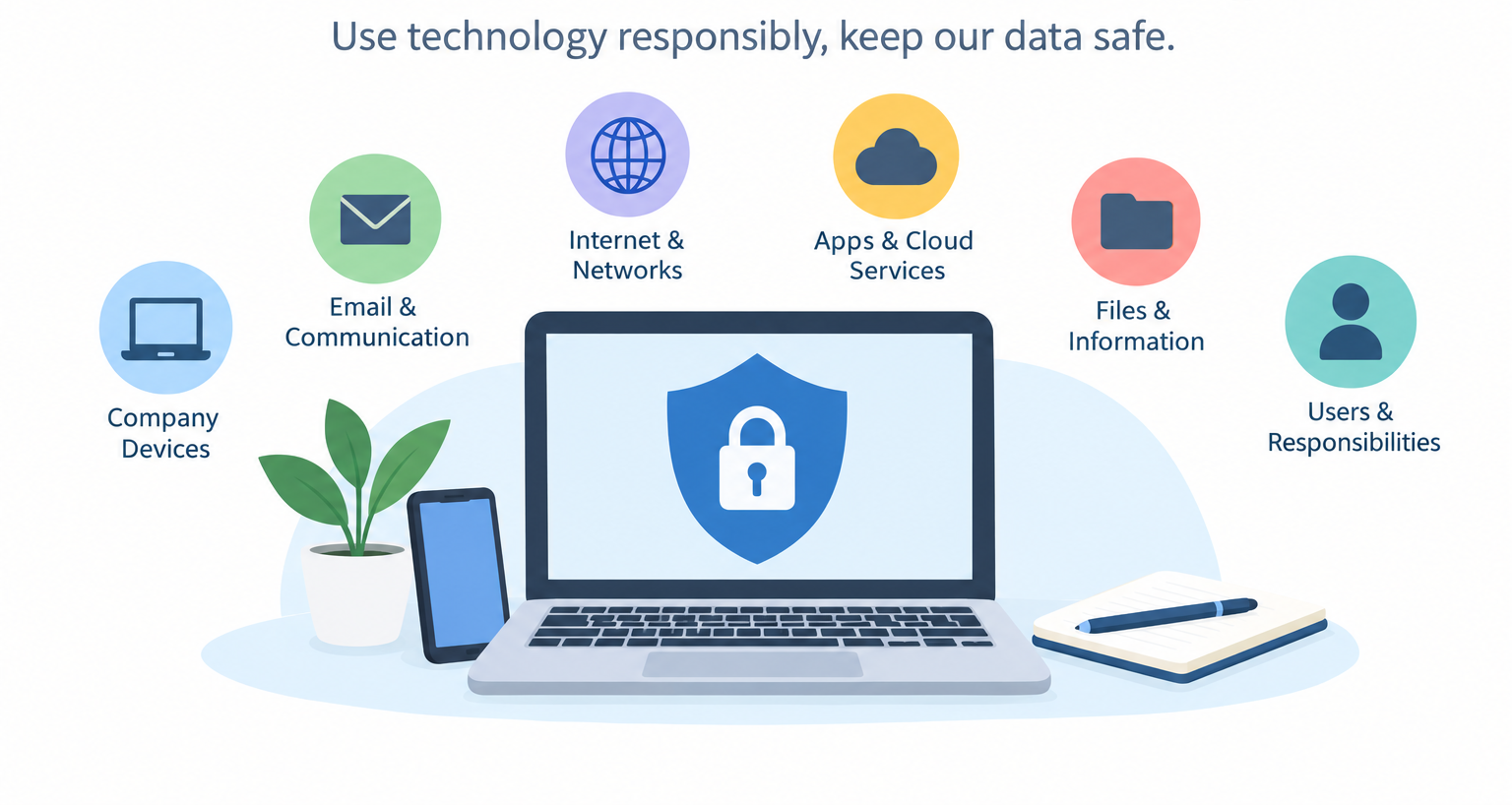
- The Acceptable Use Policy applies to employees, contractors, temporary staff and other authorised individuals who use the organisations technology.
- Company-owned computers, laptops, phones and tablets.
- Business email, messaging and video-conferencing accounts.
- Internet connections, networks and remote-access services.
- Business software, cloud platforms and file-sharing tools.
- Company information accessed from approved devices.
- Removable storage devices and equipment used away from the office.
- The Acceptable Use Policy applies whether the user works at the business premises at home or at another approved location.
2. Rules for Common Workplace Activities
| Activity | Rule | When Approval Is Needed |
|---|---|---|
| Installing software | Use applications approved by the organisation. | Before installing or purchasing new software. |
| Connecting USB devices | Use storage devices permitted by the organisation. | Before connecting an unknown or unapproved device. |
| Sharing business files | Use approved sharing services and verify recipients. | Before sharing restricted information externally. |
| Using personal email | Do not use personal accounts to transfer business information without authorisation. | Whenever an approved exception is genuinely required. |
| Remote working | Use authorised accounts, devices and access methods. | Before using an unapproved remote-access tool. |
| Using AI tools | Follow company rules for approved tools and data handling. | Before entering confidential or personal information into an unapproved service. |
| Changing device settings | Do not disable security controls or bypass restrictions. | Before changes that require IT authorisation. |
- These rules should be tailored to the applications, information and working practices used by your business.
3. Activities That Are Not Permitted
- Users must not use company resources to:
- Any activity that is expressly authorised for IT administration, testing or investigation must follow the organisations approval and access‑control procedures.
4. What Should an Employee Do?
Use these examples to help employees make the right decision.
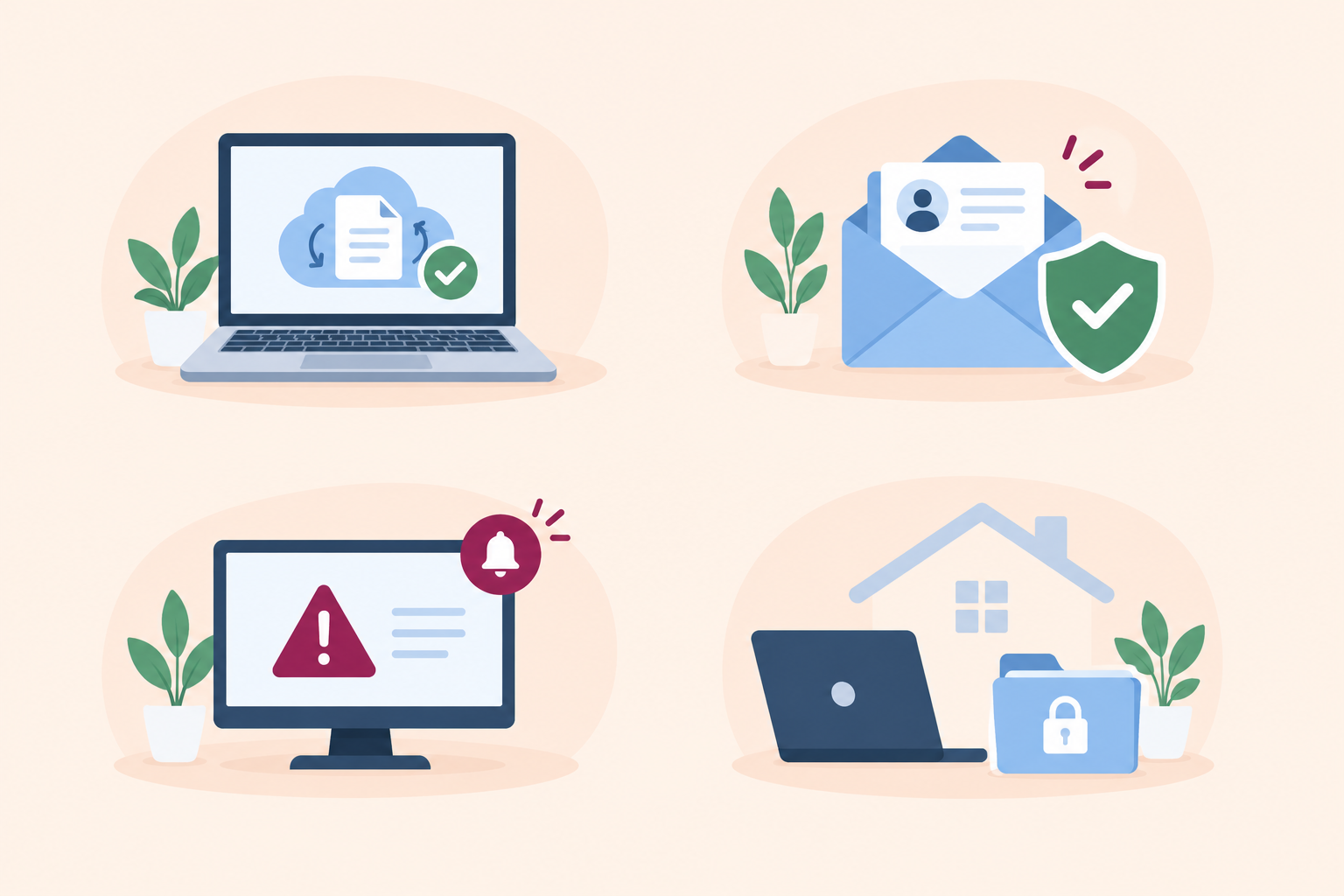
Example 1. An online service
An employee finds an online tool that converts documents into another format.
Required action: Check whether the service is approved. Do not upload company documents or personal information until its use has been authorised.
Example 2. A request from a manager
An employee receives an email asking them to send a customer file to an external address.
Required action: Verify the request and the recipient through a trusted channel before sending the information.
Example 3. A computer behaves unusually
An employee notices pop-ups, unfamiliar applications or a suspicious login notification.
Required action: Report the issue promptly through the company's IT support or security reporting process. Follow the instructions provided rather than attempting unauthorised fixes.
Example 4. Work on a device
An employee wants to download company files onto their laptop to finish work at home.
Required action: Use approved devices, applications and storage arrangements. Follow the BYOD Policy if access from personal devices is permitted.
5. Policy Ownership and Review
Organisation: [Insert business name]
Policy owner: [Insert role]
Date: [Insert date]
Approved by: [Insert authorised person or role]
User responsibilities
- All authorised users must use business technology for approved purposes. Users must guard their accounts keep company information safe and follow the organisations instructions for installing software sharing files accessing systems remotely and securing devic
- Users must not bypass limits, access unauthorised data or use unapproved services to manage confidential business information.
Personal use of company resources
The organisation's rules on use are:
- Allowed personal use: [Insert rules]
- Disallowed personal use: [Insert restrictions]
- Any time, cost or usage limits: [Insert details]
- Management should communicate these rules clearly so employees know what is allowed.
Software and online services
- New applications, browser extensions, cloud services and other tools must follow the organisations approval process. Users must not input business information into an online service unless the service has been approved for use and data handling.
Related IT Resources
Explore the Free IT Policy Templates for UK Businesses hub for related resources, including the Password Policy, BYOD Policy and Information Security Policy.